 Atlacare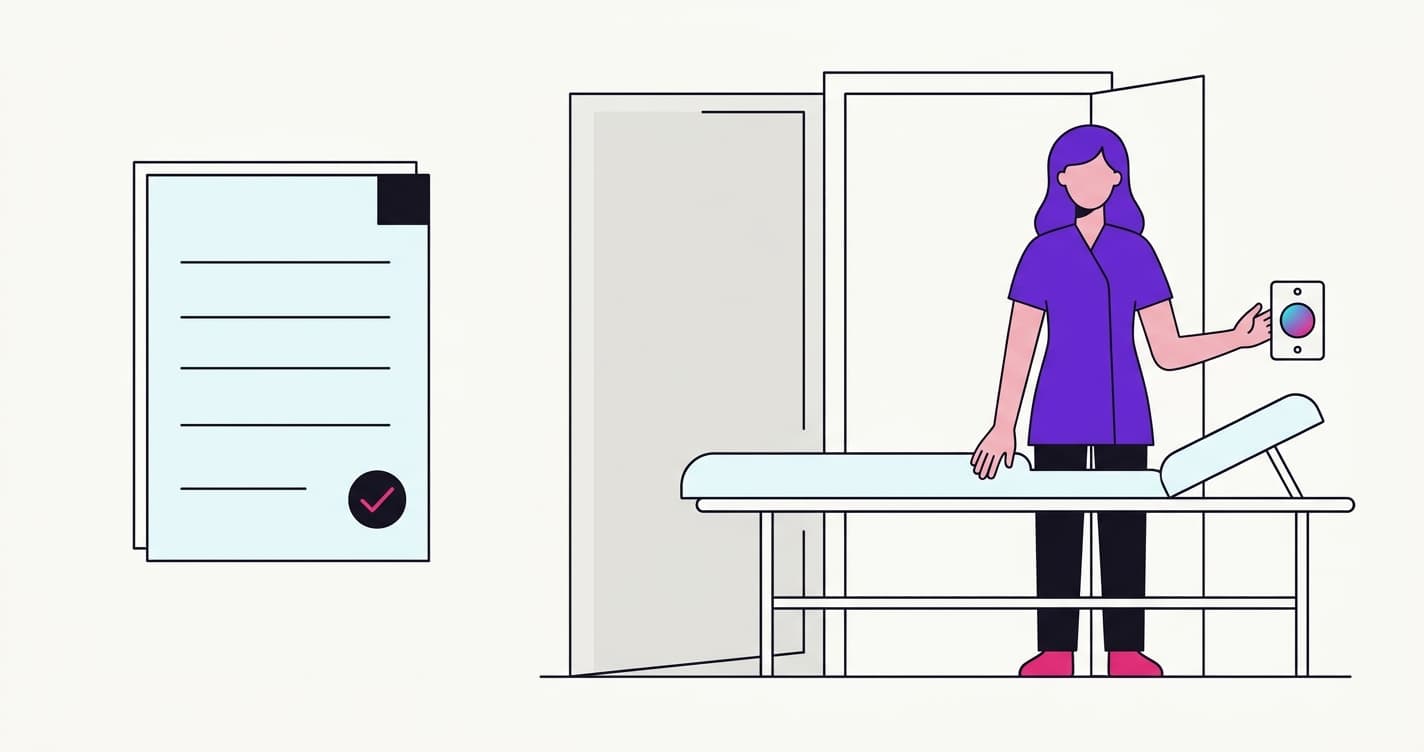
In the only substantial study of the question, 74.8% of massage therapists reported harassment from clients. That research was carried out in Canada. No equivalent figure has ever been published for the UK. The practical conclusion is not that the work is dangerous. It is that a common professional problem deserves written terms rather than improvisation.
Most of the guidance that exists treats this as an etiquette question: how to handle an awkward moment gracefully. Experienced therapists generally handle the moment fine. What is usually missing is the structure around it, decided in advance and written down.
How common is this?
The reference study is McRae and Cobb, published in the Canadian Journal of Human Sexuality in August 2020, with a sample of 143 massage therapists.
| Finding | Figure |
|---|---|
| Experienced harassment from a client | 74.8% |
| Experienced it on more than three occasions | 26.5% |
| Verbal only | 55.0% |
| Physical only | 6.0% |
| Both verbal and physical | 34.0% |
Two caveats belong with those numbers. The sample is modest, and the study is Canadian, describing a different regulatory environment from the UK.
The more telling gap is the absence of a British equivalent. The nearest UK effort we could identify was a survey run by the General Council for Massage Therapies' Therapist's Protection Group, reported by the Association of Bodywork and Massage Therapists in February 2022, drawing roughly 600 responses from an estimated 10,000 practising UK therapists. It published no percentages.
So: three in four in the only study that has asked properly, and in Britain nobody has counted. If this has felt like something the profession does not discuss, that is because measurably it has not.
Why the work needs explicit terms
Not because of anything therapists do wrong, and that is worth saying before any of the practical detail.
Four features of the work combine unhelpfully. The client is undressed. The practitioner frequently works alone. The environment is deliberately quiet, warm and private. And a persistent minority of the public still conflates massage therapy with something else entirely, a confusion that advertising and search engines have never fully cleaned up.
None of that is a reason to be anxious about the work. It is a reason to be explicit about how you run it, in the same way you are explicit about cancellation notice or payment terms.
What to set out before the first appointment
The professional frame is established before anyone gets on the couch, and the booking confirmation and intake form are where it happens.
A short, plainly worded statement does most of the work: that the treatment is therapeutic, what draping to expect, and that inappropriate conduct ends the appointment. Written once, applied to everyone, with no case-by-case judgement required.
This is worth thinking of as a term of business rather than a warning. Clients accept your cancellation policy without taking offence. The same is true of this, and a client who objects to it has told you something useful at no cost.
What your terms should say
Five clauses, and none of them need to be long.
What the treatment is. Therapeutic massage, delivered by a qualified practitioner, and nothing else.
What draping to expect, and that it is not negotiable.
That the client may stop at any point, which is both correct and sets the norm that either party can end the session.
That inappropriate comments or contact end the appointment, with the fee payable.
That you may decline future bookings without giving reasons.
That last one matters more than it looks. Declining a booking is easier when your own terms already say you can, and you never have to justify it afterwards.
Sensible working practice
Standard practice for anyone working alone, and nothing here is specific to massage.
Keep a phone within reach. On your person or a surface you can reach without crossing the room.
Keep a clear route to the door, without passing the couch, and leave the door unlocked. In a shared building, know who else is in it.
Use check-ins for home visits. Tell someone where you are and when you expect to finish, and confirm afterwards. Mobile work removes every environmental protection a clinic provides, so it needs the most process.
Know what CCTV can and cannot do. A camera in a waiting area or corridor is a legitimate deterrent. A camera in a treatment room is not appropriate, and footage of a partially undressed client receiving treatment would be special category personal data with all the obligations that brings.
Decide your rule in advance. The most common regret therapists describe is having continued a treatment they wanted to stop. Deciding now that a first incident ends the appointment removes the need to weigh it up in the moment.
If a client crosses the line
A sequence rather than a script, because circumstances vary.
- Name it plainly and once. "That is not appropriate. This is a therapeutic treatment." Most incidents end here, and the directness matters more than the exact wording
- End the treatment if it continues. You do not owe a completed session. Step out and let them dress
- Move to where other people are if the situation warrants it. Do not stay to debate the fee
- Do not waive payment to close it down quickly. It is a small sum and it complicates anything that follows
- Contact the police if there was physical contact or a threat. Assault does not become something else because it happened during a treatment
- Write it up the same day, factually: what was said or done, in what words, what you did, times, and who else was present or nearby
Afterwards
Record it properly. A dated, factual note made the same day is what you will rely on if the client complains about being asked to leave, or if a pattern emerges with the same person. Keep it somewhere a note cannot be quietly altered later. Practice systems like Atlacare lock a note on sign off and keep a versioned audit trail, and a conversation log entry against the client record keeps the account attached to the person it concerns.
Decline future bookings, once and briefly. A short written line, without argument or justification. Your terms already said you could.
Tell your professional body. They may run a protection scheme or a helpline, and they may hold a pattern of reports about the same individual.
Tell whoever you rent from. A clinic or spa operator has a duty of care to people working on the premises and needs to know.
Do not absorb it privately. The consistent thread in what therapists describe is isolation, the sense that this is an embarrassing individual failure rather than a known occupational issue. On the only data available, three quarters of the profession has dealt with it.
If you host or employ other therapists
You have obligations to people working in your building, whether they are employed or renting a room.
At minimum: a written policy stating that harassment of a therapist ends the appointment and the client relationship, a way to summon help, a rule against working late alone without someone knowing, a briefing for new starters covering what to do, and visible backing when a therapist declines a client. A policy nobody has read is worth nothing, and a therapist overruled once will not report the next incident.
The short version
Put it in your terms. Set the frame before the appointment rather than in the room. Decide your rule in advance so you are not weighing it up under pressure. End it, record it, report it, decline the next booking.
Treat the figure at the top as the reason to have written terms rather than as a reason for concern. Three in four, in the only study that has asked properly, and in this country nobody has asked at all.
Prevalence figures are from McRae and Cobb, Canadian Journal of Human Sexuality, 29(2), August 2020, n=143, a study of sexual harassment of massage therapists by clients. That research was conducted in Canada and the sample is modest; it is cited here because no comparable UK study appears to exist. Figures were obtained from published summaries rather than the paper itself, which sits behind a publisher paywall, and should be confirmed against the original before being quoted elsewhere. This article is general guidance on professional terms and working practice, not legal advice. If you have experienced assault, contact the police.
Sources: McRae and Cobb, Canadian Journal of Human Sexuality 29(2), 2020 · Association of Bodywork and Massage Therapists · Complementary and Natural Healthcare Council
Related: Do I need a special treatment licence? · Is my practice VAT exempt? · UK GDPR for practitioners